Creative Dance 3
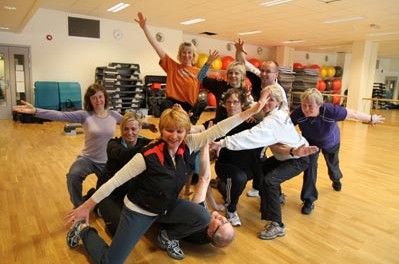
Composition and creative dance.
- 10+ years
- Group size: 2+
- Duration: 30 min
- Dance
- Mountains, forests and fields
- Gym / Sports hall
- Open space
- Indoor
- Music
Here are two exercises that focus on composition and creative dance:
1. "The Snake" – building a sculpture
The group lines up in a row, and each participant must remember their place in the line. The first person in line goes out into the room and finds a spot where he/she takes a pose – "makes a statue".
Then the next person runs over and creates a new pose that relates to the first (for example, by touch, contrast, or the same shape). This continues until everyone has taken their place, and the group has collectively created one large sculpture.
The exercise can also be done in smaller groups, such as:
- create their own sculptures
- show them to each other
- use music
- place the sculptures in different spots in the room
The purpose is to create new, shared sculptures and give participants the opportunity to see each other's solutions.
To enhance the dance aspect, you can provide guidelines for how they should move to the place where the sculpture is to be created, for example:
- walk like a robot
- move as if they are underwater
- walk very slowly or very quickly
2. Enter – Flow – Pause – Exit (Katie Duck)
Entry – dance/flow – pause – exit. This is a simple working model for composition and display, developed and used by improvisation artist and educator Katie Duck.
The leader defines a clear stage entrance that everyone must use when entering the "stage". The dancers relate to the keywords:
- Enter (go in)
- Flow (movement/dance)
- Pause (stop, stillness, calm)
- Exit (go out)
Each participant decides for themselves:
- when he/she enters
- how long he/she wants to be in movement
- when and how pauses occur
- when and how he/she exits
When not on the "stage", one stands and observes the others. The observation can provide impulses and new inspiration for one's own movement.
For many who are not used to dance, it can be challenging:
- to stand still and truly "take a break"
- to finish and exit
The leader can choose to focus on this. The most important thing is to create simple frameworks and limitations, for example:
- just "walk – stand"
- only work with circles and lines
- short entrances and exits
Variation
- with or without music
- give specific focus tasks:
- time/tempo (fast – slow)
- dynamics (powerful – soft movements)
- small vs. large movements
- contrasts (heavy/light, hectic/calm, etc.)
Work with an inductive approach:
- let the dancers find solutions themselves based on their own perspective and preconditions for movement
- as a leader, you should primarily inspire exploration, provide frameworks and impulses – not demonstrate the "right answer"
- adjust space, time, groups, and complexity according to the group's level, safety, and experience.