Math Games
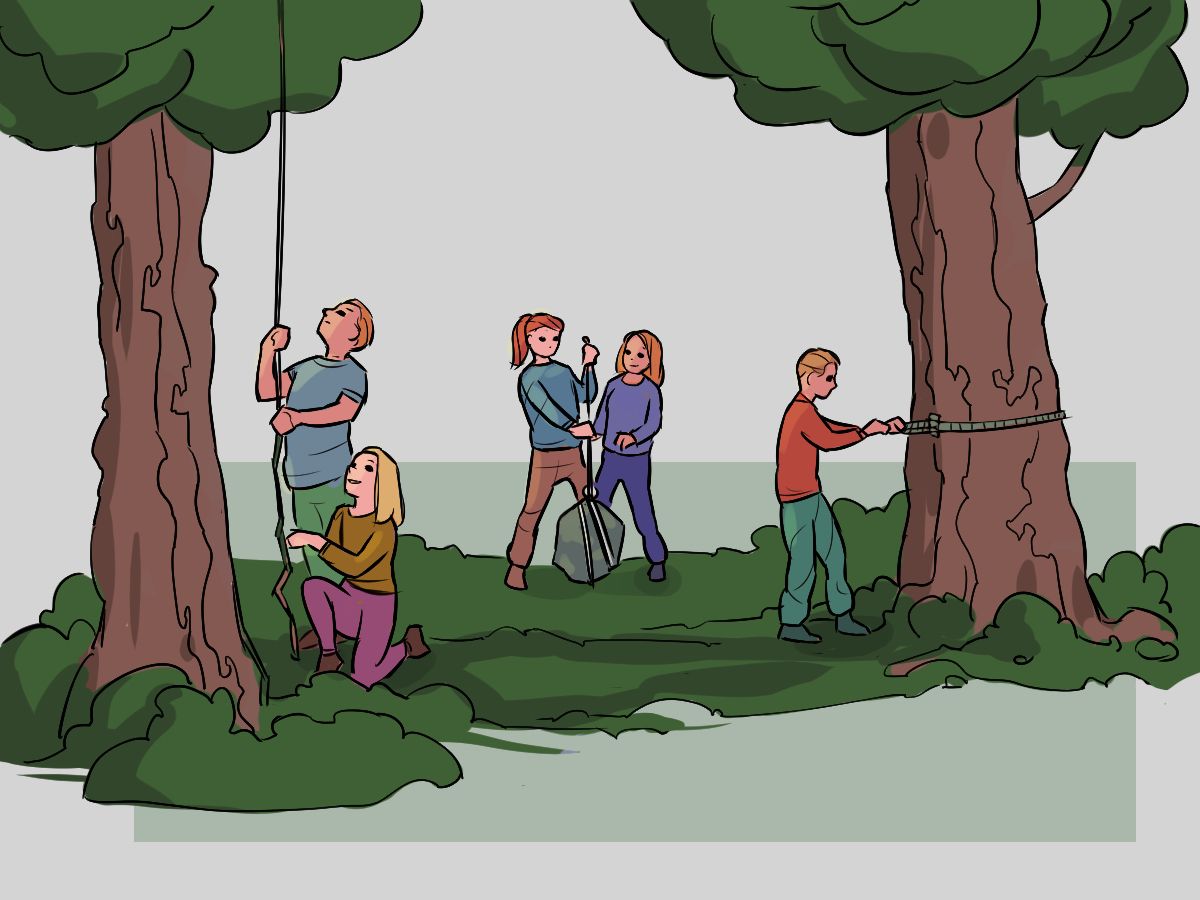
Encourage engagement in mathematics by creating variety through physical activity.
- 6+ years
- Group size: 6+
- Duration: 60 min
- Nature playground
- Physically Active Learning
- Mountains, forests and fields
- Open space
- Tape measure
- Rope
Here are some suggestions for activities where participants practice math while moving:
Minute Trail
Create a marked path (trail) that takes approximately one minute to walk.
- Participants try to complete the round in exactly one minute.
- Investigate: How long is the round?
- Calculate speed: What is the speed in m/s?
Kilometer Trail
Create a trail that is 1 kilometer long.
- Measure how long it takes to walk the entire trail.
- Calculate the speed in m/s.
Math Course
Create a course with 3–4 stations. At each station, the group receives a number/quantity, for example:
- 5 pinecones
- 8 rowan berries
- 3 stones
- 2 sticks
Once the group has visited all stations, they should use the numbers to create calculations that get as close as possible to the numbers 27, 86, and 135.
Nature Trail
Create a course with stations where the tasks are based on the nature around you. For example:
- What is the circumference of the tree?
- How old is the tree?
- How tall is the tree?
- How heavy is the stone?
- How many pine needles are on a branch?
- How many roof tiles are on the cabin roof?
- How many logs were used to build the cabin?
- Which geometric shapes can you find in the cabin?
- How many meters is it from the pine tree to the large stone?
- How many A4 sheets are needed to cover a marked area?
Example tasks:
- A piece of wood you see is 2 meters high. It constitutes 1/3 of the tree's original height. How tall was the tree before it was cut down?
- In an anthill live 53066 ants. 12287 ants are out hunting. How many ants are left in the anthill?
- Let the students find 12 twigs that are exactly 1 meter long. Tie them together to form a cube (cubic meter) and see how many students can fit inside.
Variation
The difficulty level can be increased both in the tasks and in the courses. For example:
- the calculations can become more advanced
- the stations can be placed in more inaccessible locations, so participants have to climb a tree, descend a knoll, or overcome obstacles to find the tasks.